Wednesday, February 22, 2012

Jason McLennan on Community Regeneration and Living Buildings on Monday, February 27, 2012

We will have the opportunity to learn from Jason McLennan as we continue to plan our Living Building Challenge of an existing historic structure at 1317 East Carson Street in Pittsburgh's Historic South Side! How exciting! Jason McLennan, CEO of the Cascadia Green Building Council and founder of the Living Building Challenge, and more, is coming to Pittsburgh.  Come join in on the discussion! See below for details and to register.

 For inquiries about vending and/or being part of the commercial/community kitchen at the upcoming new Schwartz Living Market at 1317 East Carson Street, contact Pam Barroso at 412.315.9319 or pjs787@gmail.com.

Phipps and Green Building Alliance are proud to present two special events with renowned green building expert Jason McLennan on Monday, February 27, 2012: A Lunch and Learn from 11:30 a.m.-1 p.m., and Drinks and Conversation from 5:30-8 p.m. Find more details and register today: http://bit.ly/wCvqbv 
_____________________

This coming Mon., Feb. 27, we will be welcoming renowned sustainability expert and founder of the Living Building Challenge, Jason McLennan, to Phipps for two exciting speaking engagements.

Phipps Conservatory Newsletter

Just Announced: Two Chances to Meet Renowned Green Building Expert Jason McLennan!

Phipps Conservatory and Botanical Gardens and Green Building Alliance (GBA) are proud to present two special events at the Conservatory with renowned green building expert Jason McLennan on February 27, 2012: A Lunch and Learn from 11:30 a.m.-1 p.m., and Drinks and Conservation from 5:30-8 p.m.

One of the most influential players in the movement today, McLennan has had a major impact on the direction of green building in the U.S. and Canada. Among his many accolades, he is founder of the Living Building Challenge (an international green building program through which Phipps is seeking certification for the Center for Sustainable Landscapes); CEO of the Cascadia Green Building Council (the Pacific Northwest's leading organization in the field of green building and sustainable development); and co-creator of Pharos, the most advanced building material rating system in North America.

McLennan's Lunch and Learn presentation will focus on the topic of community regeneration and living buildings, while the Drinks and Conversation talk will cover the Living Building Challenge and more.

Read more about McLennan »

LUNCH AND LEARN
11:30 a.m.–1 p.m.
$25 Phipps and GBA Members; $35 Non-Members
Enjoy a delicious lunch served in Phipps' beautiful, eco-friendly Special Events Hall as you learn. Vegetarian and other special dietary options will be available.

Space is limited, pre-registration is required.

Register now!

DRINKS AND CONVERSATION
5:30–8 p.m.
$5 Phipps and GBA Members; $10 Non-Members
Join us for a special evening of networking and conversation surrounded by the lush greenery of Phipps' new Tropical Forest India exhibit. Price of ticket includes admission to Phipps, one drink ticket and light hors d'oeuvres. A cash bar will also be available.

Space is limited, pre-registration is required.

Register now!

Please help us spread the word by forwarding this e-mail widely to friends, family and colleagues, and let's give Jason McLennan a warm Pittsburgh welcome. We look forward to seeing you, too!
Photos by Paul g. Wiegman and Paul Dunn for YES! Magazine
Phipps Conservatory
phipps.conservatory.org | One Schenley Park, Pittsburgh, PA 15213
Follow us: Twitter :: Facebook

Friday, December 30, 2011

Happy 2012! Thanks for the signs Joe! Seventy four years and counting!

The clean up is under way at 1317 East Carson Street. The frontage on E. Carson Street is undergoing a transformation and plans include re-opening the food business in the spring. There will be many booths for rent. Rental details will be available soon. Stay tuned ! Here's to a Happy, Healthy and Fun 2012!

Joe Liotta has been painting the signs for the windows of Schwartz Market since 1938!

Thursday, November 10, 2011

Alcosan's Regional Wet Weather Plan Town Hall in South Side and the Implementation of Green Infrastructure

Last night's meeting sponsored by the Allegheny County Sewer Authority, Alcosan, at the IBEW Hall was interesting and informative. Why be informed about the 2 billion dollar plus plans being formulated now by Alcosan to deal with the consent decree that must be met by our region?  Well, we as taxpayers will be paying for it, we as a species can be part of the solution, and well, it is interesting to me to understand how our project at 1317 East Carson relates to it all. We are in the process of getting bids for the short term plan. That involves putting in an American with Disabilities (ADA) bathroom. As we have been thinking about bathrooms, we've also been pondering the idea of composting toilets in the future as part of what we are striving towards as individual commercial building owners and as citizens of the earth. Here's a few references to learn more about the topic: The Humanure Handbook by Joe Jenkins and Anna Edey's Solviva http://www.solviva.com/, perhaps the woman who inspired Joe? Let's educate ourselves about what the full range of what green infrasturcture can mean.

Upcoming meetings to learn more about Alcosan's plan being formulated are 11/14/11 10:00 to Noon at the Undercliff Fire Hall on 700 Mount Royal Road in Pittsburgh, PA 15223, 11/14/11 from 5:30 to 7:30 PM at Gateway Hall, Monroeville Fire Dept. # 4, 4370 Northern Pike, Monroeville, PA 15146 and the final public meeting will be an all day event on Tuesday, November 15, 2011 at the Senator John Heinz History Center, 1212 Smallman Street, Pittsburgh, PA 15222. This final region wide meeting will be all day, from 10:00 AM to 4:00 PM.

Below is an excellent piece from the Center for Neighborhood Technology in Chicago. This is an wonderful beginning. There are examples of many of these types of green infrastructure efforts around the Pittsburgh region. The full reference is listed at the bottom of this page. Elisa Beck


What is Green Infrastructure?

Green infrastructure is the interconnected network of open spaces and natural areas, such as greenways, wetlands, parks, forest preserves and native plant vegetation, that naturally manages stormwater, reduces flooding risk and improves water quality. Green infrastructure usually costs less to install and maintain when compared to traditional forms of infrastructure. Green infrastructure projects also foster community cohesiveness by engaging all residents in the planning, planting and maintenance of the sites.

Raingardens

raingardens1
  • Rain gardens recharge groundwater sources, meaning that fewer pipes need to be installed to move water around the region.
  • They help protect communities from flooding and drainage overflow and provide valuable wildlife habitat.
  • Additional benefit: costs less to maintain than traditional forms of landscaping.
A rain garden is a man-made depression in the ground that is used as a landscape tool to improve water quality and reduce flooding. The rain garden forms a “bioretention area” by collecting water runoff and storing it, permitting it be filtered and slowly absorbed by the soil.

Wetlands Restoration

wetlands1
  • In addition to capturing and slowing water and improving water quality, wetlands provide valuable wildlife habitat and recreational opportunities (hunting, fishing, bird watching).
Wetlands are areas where water covers the soil, or is present either at or near the surface of the soil all year or for varying periods of time during the year, including during the growing season.

Trees

trees1
  • Tree windbreaks reduce residential heating and cooling costs by 10-50 percent.
  • Trees reduce air pollution and there is increasing evidence that they play a role in reducing crime.
  • Unlike sewers and built infrastructure, trees appreciate in value and require less maintenance as they age.

Green Roofs

green-roofs1
  • Depending on rain intensity and greenroof soil depths, runoff can be absorbed between 15 to 90 percent, thereby considerably reducing runoff and potential pollutants from traditional impervious roofing surfaces.
  • Overall building energy costs can be reduced due to the greenroofs’ natural thermal insulation properties— structures are cooler in summer and warmer in winter.

Swales

swales
Swales typically have several advantages over conventional storm water management practice, such as storm sewer systems, including:
  • the reduction of peak flows;
  • the removal of pollutants,
  • the promotion of runoff infiltration, and
  • lower capital costs.

Porous Pavement

porous1
  • reduces impervious areas,
  • recharges groundwater,
  • improves water quality, and
  • eliminates the need for detention basins.

Native Landscaping

native1
  • Native landscaping attracts a variety of birds, butterflies and other animals, supporting biodiversity.
  • Once established, native plants do not need fertilizers, herbicides, pesticides or watering, thus benefiting the environment and reducing maintenance costs.

Greenways

greenways1
  • Streambanks along trails & greenways provide more surface area for natural absorption to lessen necessary sewer capacity.
  • Trees slow down and clean water before it enters a stream or sewer.
  • Additional benefits: increased tourism and opportunities for physical activity; increased property values.
Greenways are privately or publicly owned corridors of open space which often follow natural land or water features and which are primarily managed to protect and enhance natural resources.

Featured Publications

Read our Green Solutions Manual

trouble-to-treasure
Water: From Trouble to Treasure(2.1mb, .PDF) 01/16/07

Related News

October 26th, 2011 Money Doesn’t Grow on Trees, For Now

A new CNT study shows that Portland is well-positioned to pilot a tree asset management program that would lay the groundwork for turning its tree canopy into a bondable asset, similar to bridges and roads. The study identified six steps through…

October 12th, 2011 Chicago Mayor Proposes Increase in Water Rates to Fund Infrastructure Improvements

CNT welcomes Mayor Rahm Emanuel’s move to modernize Chicago’s water infrastructure through increased, and arguably fairer, rate prices. The decision will reduce the amount of water lost through leaks in crumbling pipes, and improve the system’s ability to deal with…

September 27th, 2011 Wangari Maathai Memory Lives on at Al Raby School in Chicago

We at CNT are saddened to learn of the passing of 2004 Nobel Peace Prize Laureate Wangari Maathai, founder of the Green Belt Movement. Wangari Maathai Memory Lives on at Al Raby School in Chicago. CNT was honored to have Ms. Maathai join us at the dedication of one of our first green infrastructure projects, located at the Al Raby School for Community and Environment and named in her honor.

CNT Update Mailing List:

Tuesday, November 8, 2011

Re-Activating Schwartz Market

Poster from Sustainable Pittsburgh


Copy and paste this link http://postgazette.com/pg/11312/1188257-294-0.stm and read the article inside the front page of today's Pittsburgh Post Gazette! When folks ask what we are planning for the market over the next months, it's the article to refer to! We are actively soliciting vendors for our space in Schwartz Market. Interested in incubating your sustainable/regenerative food business with real goods? Do you have an existing small food business that you'd like to expand? Contact Debbie Maier Jacknin at 412.427.5500 or debo1960@aol.com


Friday, October 28, 2011

Window Dressing with Art at Schwartz Market!


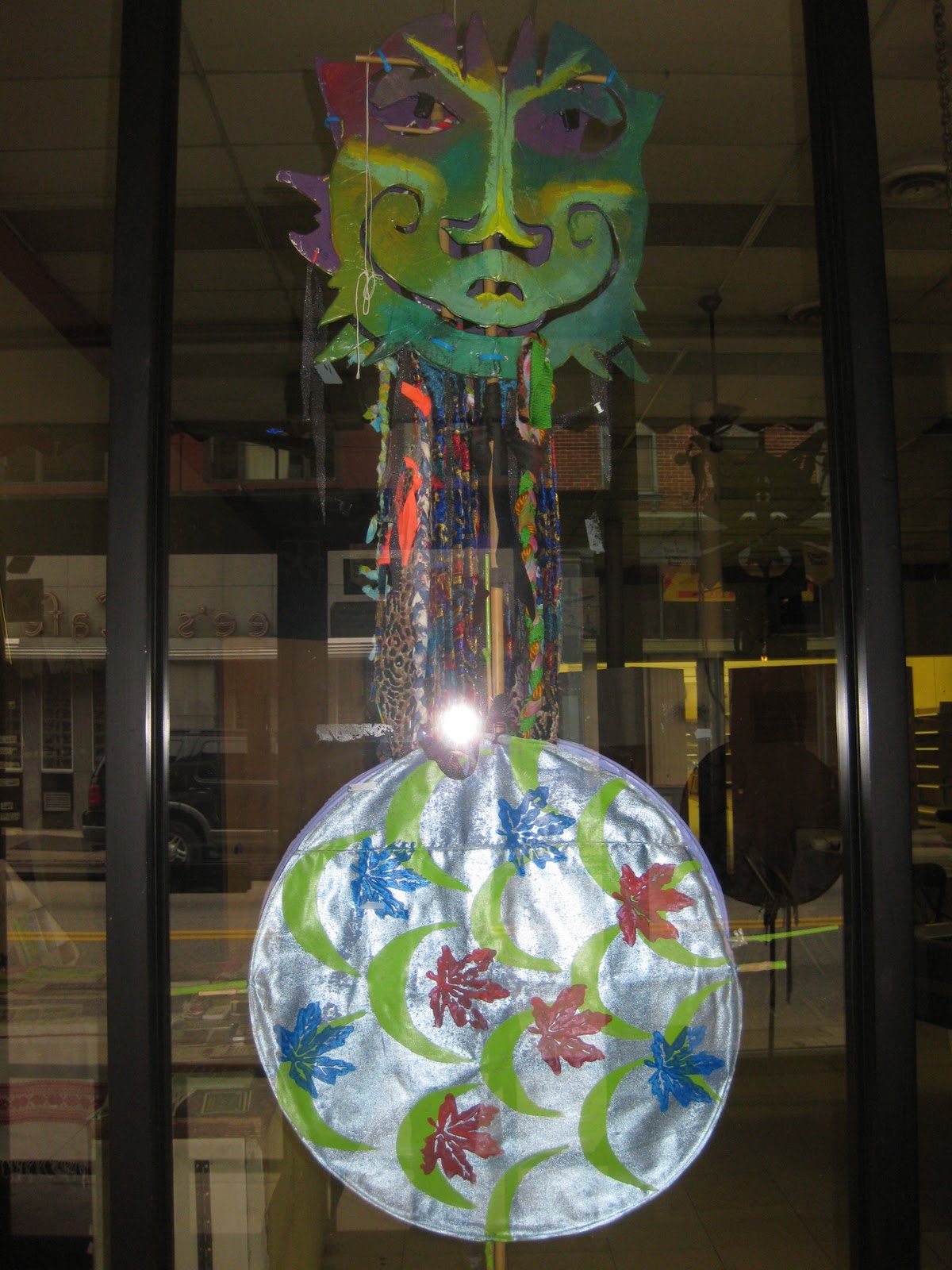
Check out our windows at 1317 East Carson Street this weekend and see What's New! Artist Cindy Snodgrass is in the process of installing several beautiful puppet-like beings created in collaboration with other artists and adults and children!  Have a great weekend! Please contact me if you or someone you know is interested in selling their foods or goods at the market. We are renovating, are looking for folks to rent booth space, and plan to re- open in early 2012! Thanks. ElisaBeck@aol.com

Wednesday, October 26, 2011

Deconstruction at 1317 East Carson Street

Where are we in this project at 1317 East Carson Street the home of Schwartz Market, and What's Next? What are all of our roles in this transition to our new culture, our new, and possibly different way of being?

What is Deconstruction? I learned the word a few Sundays ago when visiting the site of Transformazium in North Braddock, PA. Demolition, "Demo" for short, is the term used in the construction industry and really any industry that works with changing a building from its existing form to something other.

Demolition in an old building often involves removing existing fixtures and walls, down to the studs at times, disposing of the materials in a dumpster headed to a landfill, and then installing new things in the place of what was removed.

Deconstruction, or "Unbuilding", or "Green Deconstruction" is a new way of thinking about this process, at least for me and for those taking the Transformazium tour a few Sundays ago. That tour really got me thinking.  I thank Pam Barroso, a fellow Sustainable Monroevillian for letting me know about the event, which was in collabortion with a current art exhibit the Miller Gallery at Carnegie Mellon University.

Four women that live and work in Braddock formed Transormazium. The project is focusing on Deconstruction of a formerly condemned church that they bought in their neighborhood. Their original intention was to put in a community/ commerical kitchen and more. As they started to look at the church and the lot across the street from bottom to top, and inside out and deeply consider what they were doing, they wound up spending a lot of time on the process of undoing the existing structure of the building. As they slowly considered every piece of everything they were dealing with, they realized they were engaging with community in a special way. a real way. An every day way. They often find themselves explaining what they are doing because they are doing it slowly and mindfully. They are thinking about what they are doing and considering the idea of Cradle To Cradle.

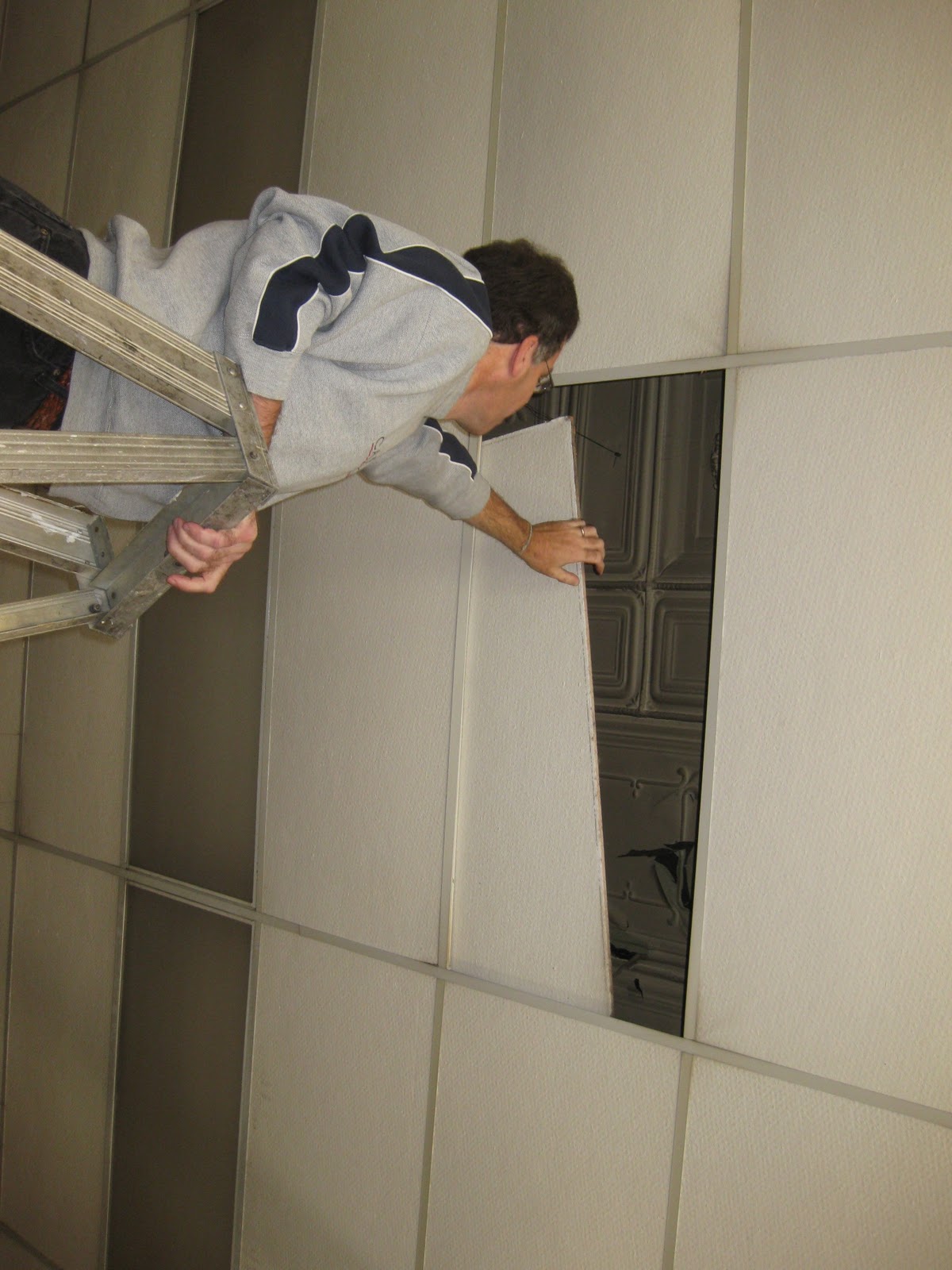
So back to E. Carson Street, and where are we in what we are doing? We are in the process of implementing a short term plan so our family can retain ownership of the building. We need to make sure the building is occupied by paying tenants in short order. We are looking for tenants to rent booths similar to what the Pittsburgh Public Market in Pittsburgh's Strip district has done. Please contact us by replying to this blog or e-mailing elisabeck@aol.com if you are interested in occupying the space. Implementing the short term plan, we intend to open the market space by March 1, 2011. How does that fit into the long term vision that you've read glimpses of earlier in this blog site? As we work towards the Living Building Challnge, we will meet LEED EB and LEED EBOM, I think it's called. The OM stands for Operations and Management... Yesterday we moved aside some ceiling tiles and peeked behind them to see some beautiful tin ceiling tiles, with lots of lead paint flaking off of them. We are getting bids to remove and remediate asbestos floor tiles and lead paint throughout the building. With each step we are considering the ideas of deconstruction rather than demolition. We are paying attention to our health, the health of those that will be doing the work, and the health of those that will be occupying the building in the future.

Deconstruction, the word itself is so much softer and less harsh. We need to be differently as we move through this process.

Brad Hochberg of Energreen revealing what is above that drop ceiling. Thanks Brad!

Sunday, October 2, 2011

From the top of 1317 East Carson Street, visualizing one green rooftop at a time!

Greater Pittsburgh Community Food Bank's, Kerri LaCharite and James Harrell, Jr., will be speaking at 7:00 PM, October 3, 2011 in the downstairs program room of the Monroeville Public Library. Come join us to see the new USDA People's Garden and to learn about volunteer opportunities, food security and more.  Let's start the conversation about Food, Not Lawns! So, as the urbanites grow more food on their rooftops, and the suburbanites grow more and more food on their lots, we'll be making it available at 1317 East Carson Street/ Schwartz Market. Linking suburban food production to the urban core!  See you there! www.sustainablemonroeville.com


Perhaps the Beehive and City Theatre will grow food on their rooftops too? How about a beehive or two or three on top of the Beehive? Collaboration and cooperation is what it's all about!